

What is an open relationship? What could we all learn from them? Do people in open relationships not experience jealousy?

Open relationship – just an option among many others?

There is more and more talk about the open relationship as an acceptable form of relationship. In this article, I’ll be discussing what the open relationship means and what the pros and cons are.

It seems that the one thing that most people considering an open relationship are uncertain about is jealousy: Don’t people in an open relationship ever feel jealous? Besides jealousy, we will also be looking that these questions:

  • What is an open relationship and why is it worth considering just as a possibility among many.
  • Are people in an open relationship free of jealousy?
  • Why do we feel the need to find The One, a perfect partner?
  • What could those in a traditional, exclusive relationship learn from open relationships?
  • Why could just one conversation potentially save your relationship?

Mr and Mrs Right-for-me – right now

It is our learnt way of thinking that we should not be interested in or feel sexual desire towards anyone else apart from our own partner. If we do,  it means that we don’t love them enough. It means that something is wrong in our relationship. The narrative of Mr or Mrs Right is very predominant in our culture. 

According to that myth, once we meet the partner who is right for us, we will never meet anyone else. If – of statistically speaking when – a person at some point of a long relationship feels drawn to another person, the options have appeared very limited: the disapproved but oh-so-common cheating or breaking up. And even if your interest or infatuation with someone other than your partner didn’t even lead to anything, many struggle with the mere thought. Even feeling like that can make us feel guilty, a failure and ashamed. 

The thoughts racing through your mind might be: Am I incapable of a committed relationship? What happened to the happily ever after? Why can’t I be happy like my parents? They  had a wonderful “till death do us part” relationship? Or did they…? In Western culture, estimates tell us that nearly half of marriages end up in divorce. Also, approximately one third of women and a slightly more men have extramarital relationships.

What is an open relationship and what is acceptable in it?

A simple definition goes: two people are in a relationship but can also to see other people. Whether the relationship with other people should be purely about sex or whether deeper feelings are acceptable, is up to the couple to decide. An open relationship is every individual couple’s own arrangement. Therefore, open relationships do not have to follow any pattern. Some couples are not comfortable with their partner having a long-term relationship or one involving deeper feelings. Other couples are fine with it.

It would seem that the rules of open relationships are the next most intriguing aspect of open relationships after jealousy. What is and isn’t acceptable in an open relationship? Like all couples in any type of relationship in my opinion should do, the “rules” and boundaries of open relationships is up to the couple to negotiate.  So why aren’t people in traditional monogamous relationships having these negotiations?  I’ll talk about that later in this article. 

Open relationship – just a type of relationships among others?

There are different forms of ethical non-monogamy. They include open relationships as well as a number of other relationship models based on mutual consent. There are various descriptive labels such as polyamory, swinging and relationship anarchy. These relationship types can be further classified according to whether they are more about sex or feelings. Another basis for a relationship is simply freedom to let the relationship evolve. The couple decides to let it go whichever way it naturally gravitates to rather than define it in anyway. Some call this relationship anarchy. 

Open vs. exclusive relationship?

The terms ‘open’ and ‘exclusive’ relationships describe a relationship in terms of certain elements. For example, an open romantic relationship allows the partners to fall in love with or have crushes on people outside the relationship. In a sexually exclusive relationship, sexual interaction is acceptable only between the two partners. A monogamous relationship is a romantically and sexually exclusive relationship between two people. A polyamorous relationship is a romantically and sexually open relationship between two people. People can have several polyamorous relationships with different partners.

Norms dictate what is normal and desirable

Normative monogamy refers to the unspoken rules and implicit norms that dictate what intimate relationships look like. They also define how monogamous relationships work and what type of behaviour is acceptable and desirable in them. Therefore, there is no need to write a story about the rules or prejudices that govern exclusive monogamous relationships. We already know what they are. 

It is these norms that let us assume, unless otherwise specified, that romantic relationships are exclusive relationships between two people. It also seems to be the assumption that an exclusive relationship is what everyone, by default, wants. Or at least should want! In practice, this shows in the questions that young adults often hear: Have you found the right one yet? Have you already “settled down”?

Escalator towards marriage

People who choose non-monogamous relationships often want to challenge or completely depart from the predetermined script of intimate relationships. First you date, then move in together, get engaged, get married, have children. Add to that the shared mortgage, a car and summer cottage. This path is sometimes called the relationship escalator. The only way is onwards and upwards, towards marriage and children.

Is an exclusive relationship the pinnacle of love?

Normative monogamy can be criticised on many levels. Perhaps its  most questionable aspect is the idea of owning or controlling another person. The control shows in many surreptitious ways. You should consult your partner before going out. Otherwise your partner may be apprehensive about you meeting friends of the opposite sex. People are also increasingly questioning the priority that exclusive romantic relationships take over any other relationship. 

The automatic prioritisation shows in the many unspoken assumptions we live by. One of the common expectations is that couples should spend more time together than with friends. Some find it odd if a couple doesn’t go on holidays together. We seldom question these rules. Do we actually agree with them? Feminist criticism has questioned the most dubious traditions, particularly from women’s perspective, such as wedding traditions. The wedding industry and bridal marketing talks about “the most important day of your life”. This sentence implies that a woman’s most important goal in life is to get married.

Open relationship = less pressure to be your partner’s everything?

You are my everything… This refrain is often heard in love songs and rom coms. This romantic notion we have adopted from pop culture and entertainment industry perpetuates the expectation that everyone should have one perfect partner, “The One”. This is probably behind the persistent need my many to “settle down” and have a family. Phrases like “my other half” suggest that without a partner we are not complete persons. 

One of the benefits of an open and non-monogamous relationships is that you have several people sharing the pressure to satisfy someone’s needs and desires. The onus is no longer on you or your partner to be your best friend, best lover, financial provider, the one who makes you laugh and shares the responsibility of raising kids. It doesn’t necessarily take an open relationship to have more reasonable expectations. It is perfectly possible to achieve similar balance in a monogamous relationship but does require one important discussion; I’ll discuss this more towards the end of this post. 

The big questions: open relationship and jealousy

Owning, controlling and feeling jealous for another person has traditionally – and sadly – been understood as synonyms of love. In the great love stories that we grew up on, people are torn by jealousy, relationships break down because of it and it drives people to desperate and violent actions. The entertainment industry has a profound impact on us growing up. In the popular narrative, jealousy equals true love, and mild expressions of jealousy are generally quite acceptable. Have you noticed how certain headlines are often written in passive voice: e.g.

“Is jealousy ruining your relationship?” It is as if jealousy is some third person in the relationship. But is it jealousy who stalks or assaults their partner? It is almost like the perpetrator is somehow relieved of their responsibility by jealousy. 

Jealousy is a natural emotion

We have all felt jealous at some point in our lives. There is nothing special, wrong or dangerous about it.

But it can turn dangerous if it becomes an excuse to hurt someone or violate their privacy, as often happens. Jealousy does not give anyone a licence to be violent and abusive.

Imagine a continuum with fairly harmless possessive gestures at one end. These include reading your partner’s messages without permission or the apparently common expectation in relationships to ask your partner’s permission to go out. In the opposite, the harmful end of the continuum, you’ll find abuse: from prohibiting friendships with members of the opposite sex to downright physical abuse, justified with jealousy. It is interesting to test where your limits stand on that continuum. Would the behaviours be ok if the person was someone else’s partner, not yours? What if it was the partner of your close friend? 

Open relationships are not free of jealousy

Based on what I’ve learnt from the Internet and magazines and literature, the common assumption seems to be that people who choose an open relationship aren’t or have learnt not to be jealous. My own anecdotal evidence tells me this is simply not true. Of course there are people in whose emotional repertoire jealousy does not exist. However, most people in open relationships feel jealous just like those in traditional, exclusive relationships. It is a common misconception that monogamy should somehow protect us against our partner meeting anyone else. We expect monogamy to save us from jealousy. 

Seen from another angle, isn’t jealousy actually built in in the idea of somehow owning another person? Be it as it may, according to statistics on cheating and secret affairs, the reality is that the supposedly exclusive relationships often aren’t exclusive at all.  

This begs the question, why are open relationships such a taboo when it is simply people doing what they do anyway, having sex with other people, only with your partner’s consent?

Should we learn not to feel jealous? 

Some research suggests (e.g. Perspectives of Psychological Science, 2017) that those in an open relationship trust their partners more and feel less jealous than those in an exclusive relationship. The researchers are debating that this is probably because jealousy is an emotion you simply have to come to terms with in an open relationship. 

Are you jealous or afraid of rejection?

Jealousy is quite a vague emotion. And like all unpleasant feelings, the instinct is perhaps to stop having it without it too much thought. However, we all know that what we try not to think about is exactly what we end up thinking about. (Here’s a classic: Don’t think of pink elephant! So, what are you thinking of?)

The same goes for jealousy. But jealousy can be representation of a host of other emotions, such as fear of rejection or lack of confidence

Picture a scenario where your partner is having sex with another person. How does it make you feel? Would you feel happy for them or would you be afraid that the other person is a better match for your partner than you? Or would you be annoyed because you are not having as much fun? If this scenario is too painful to contemplate, picture instead your partner going out, going on a holiday, celebrating something special with their mates, no sex involved.

The next time you feel jealous can you pause and think what the feeling of jealousy is telling you? Is it a sign of insecurity or feeling like you are not enough? Is it envy, are you missing them, are you afraid of losing them or being rejected by them? Naming the underlying emotion may help you break down your jealousy into more manageable bites and make it less scary. 

Open relationships and compersion: what if you could be happy for your partner’s pleasure?

Compassion is a virtue that we all recognise. A much more rarely talked about feeling is compersion. These feelings, like all other positive feelings, are found to be linked with psychological wellbeing in many ways. Compersion is being glad for your partner when they are experiencing pleasure and joy, be it in bed or on a date with a wonderful person. 

In some open relationships, the partners want to share all their dating experiences in great detail at home, in others those experiences stay private. The level of sharing, like all aspects of an open relationship, is entirely for the couple to decide between themselves. There are no universal rules to follow. 

Less pressure and more enjoyment

For some, opening their relationship has added the couple’s sexual attraction to each other. Perhaps the partner, who was becoming more like a comfortable piece of furniture, suddenly looks attractive again in the knowledge that others want them, too! Or perhaps there is less pressure to have sex, knowing that your partner is finding satisfaction elsewhere. Maybe it’s a positive cycle: having more sex increases your interest in having more sex! 

In this blog post, I’m concentrating mainly on the assumptions we have about open relationships and how an open relationship could be seen as just another type of normal relationship. Just to be clear, let me reiterate that no relationship, of any shape or form, can guarantee you happiness. All relationships have problems. An open relationship requires a lot of honesty, flexibility and open communication. It certainly isn’t everyone’s cup of tea. Opening the relationship is probably also not the best of ideas if there are problems in your relationship.

We are brought up on normative monogamy

The day when we all would feel free to choose how we like our relationships is still far away. We are taught from infancy that the normal arrangement is to live in a romantic and sexual relationship with just one partner. We learn that this is the most desirable state of affairs, and this ideal informs our thinking, whether we like it or not. 

That we are not even aware of these thought patterns and practices is a good indication of a norm being firmly in place and also that you haven’t broken that norm. We seldom feel the need to debate things that we don’t even think to challenge. Only once somebody acts against a norm do we become aware of its existence. You don’t see magazine articles about mothers who stay home to look after the children, but when a father does the same it is worthy of news. 

Another sign of a norm at play is not having to justify your decisions. Or:

Have you ever heard anyone question a couple: Why don’t you have sex with other people?

Or do people regularly wonder out loud Oh dear, I could never be in a monogamous relationship! These examples may sound silly or even grotesque. That only goes to show the strength of the monogamous norm in our society. 

There are many reasons why people might end up having an open relationship. However, a common factor often is the need to question relationship norms: Why should people have sex only with one person just because they are in a relationship? The divorce and cheating statistics being what they are, wouldn’t it make sense to accept different arrangements? 

What could those in a traditional, exclusive relationship learn from open relationships?

At the beginning of this blog post, I mentioned in passing a conversation that could save your relationship. You might now guess what I was referring to with that. I was talking about a conversation about the content of your relationship, and the needs, desires and boundaries in it. By far the more effective alternative is to have that conversation before your relationship hits a crisis point. And even better: have it before you embark on a relationship. 

However, we are not in the habit of doing that. We live by the assumption that the other person shares your ideas about what a relationship should be like. And yet we are all individuals. We all have our unique hopes, desires and needs, so why on earth should every relationship be identical? 

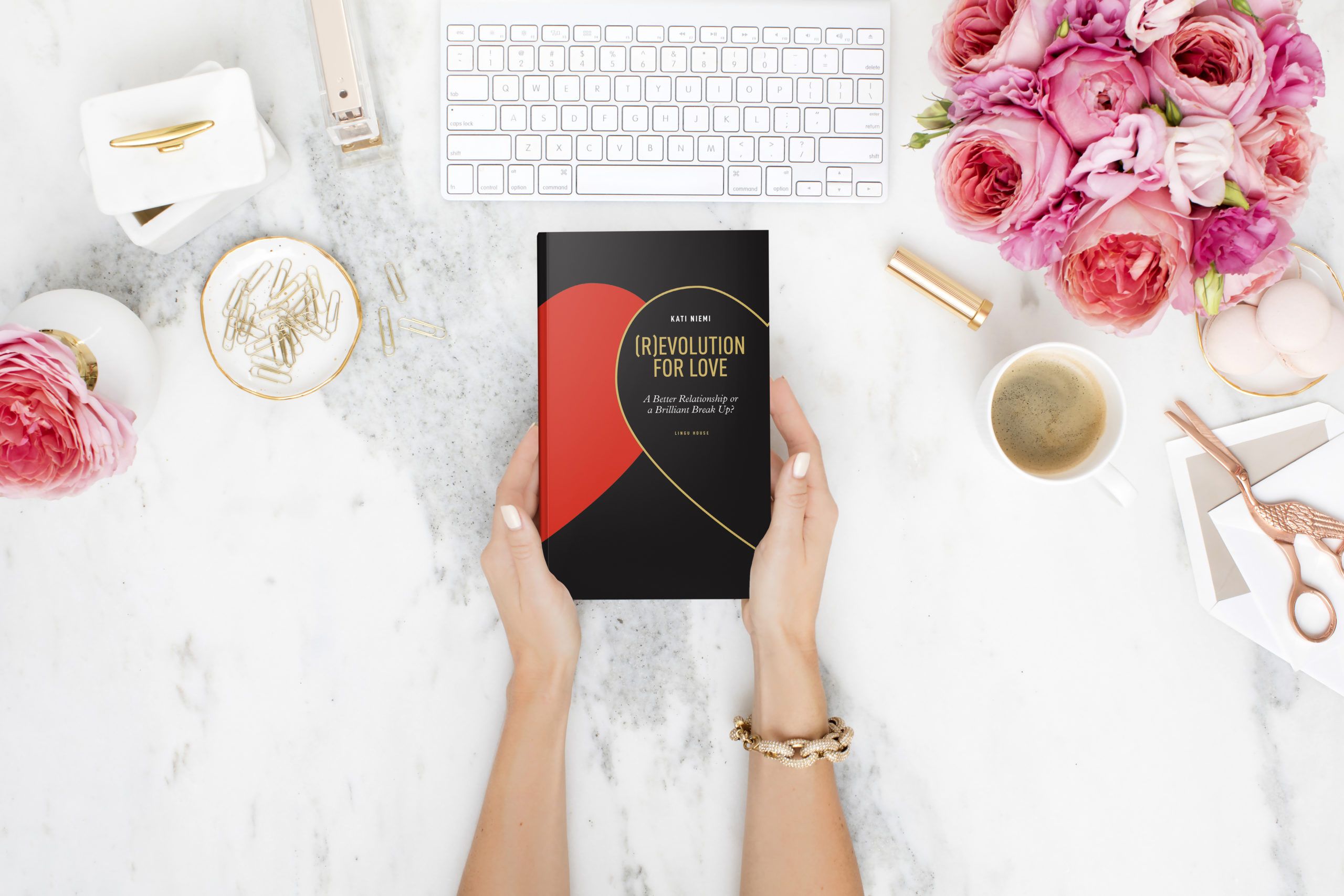
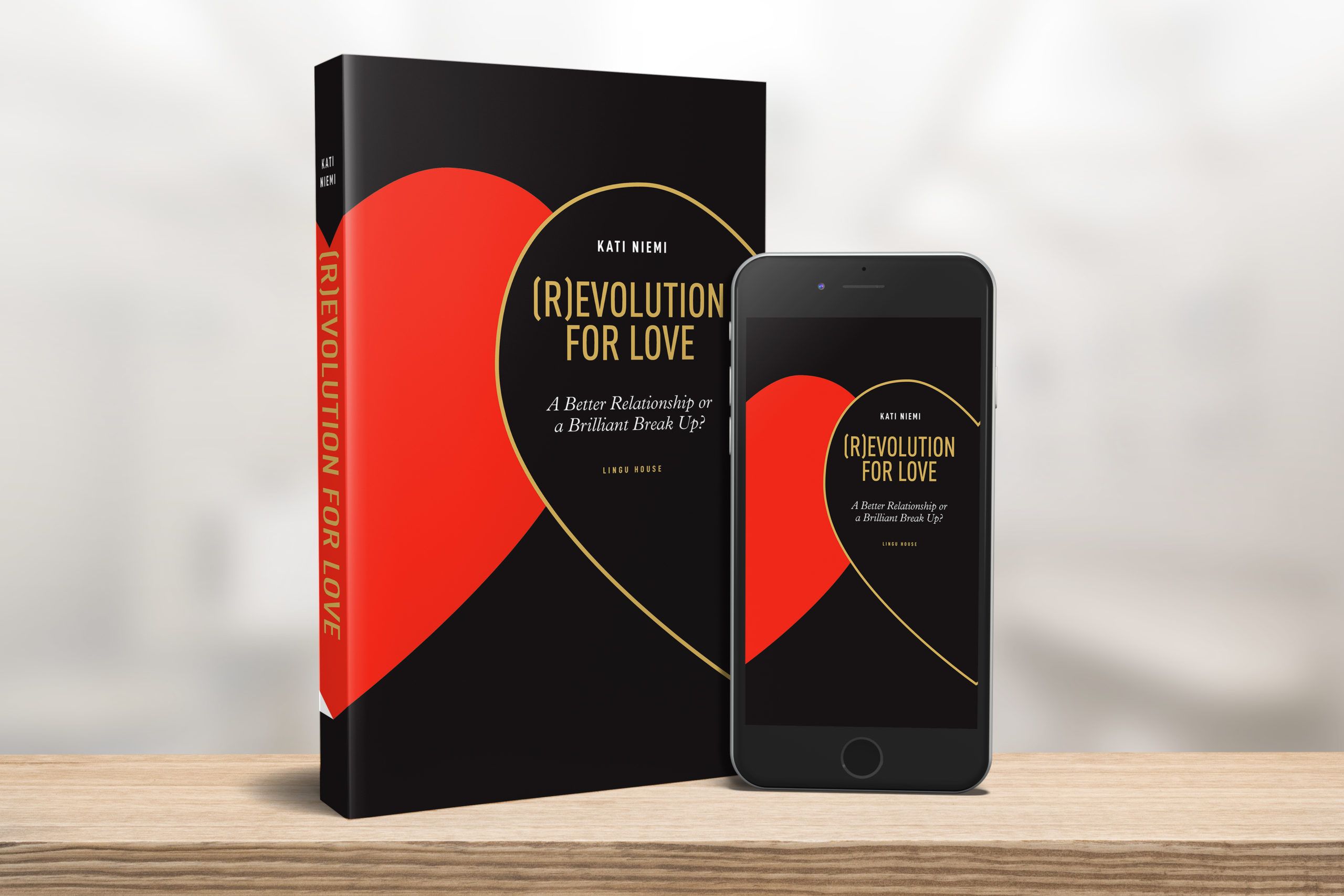
To prepare for that conversation, think in advance what a good relationship to you means and looks like? Write your thoughts done and then compare your answers. Focus on the elements on your lists that don’t match. There are plenty of other useful tools for the same purpose, and I’ve introduced many of them in the 57 exercises in my book (R)evolution for Love. Find out more about the book by clicking the below image

But what if an open relationship is not for you?

It’s ok. Nobody has to agree to an open relationship if they don’t want to. It’s not for everyone. But nor is monogamy, unlike our traditions and assumptions would have us believe. That’s why it is so important to bust those relationship myths and bravely talk about them as valuable options for the traditional exclusive relationships. 

This would give man individuals and couples a much better chance to enjoy good and satisfying relationships and the multitude of positive effects on our mental and physical health. 

In case you are considering an open relationship or in need of guidance in your open relationship I can help you! 

Coach Kati Niemi - Mindshifting MOMENTUM Ltd

Motivating You to mindshifting in many ways,

Your Coach Kati Niemi
Clinical Hypnotherapist, NLP Trainer, M.Sc.
[email protected]

Please share your thoughts!

Leave a Reply

Your email address will not be published. Required fields are marked *

FREE EBOOK ‘I love you but…’ – To Break Up or Not to Break Up?

FREE ebook ‘I love you but…’ will help you move towards a better relationship or a successful break up.